
Developers & integrations
Open by design.
Your operation's data belongs to you — so the platform exposes it: REST APIs for your engineers, n8n for your automations, and MCP for your AI assistants.
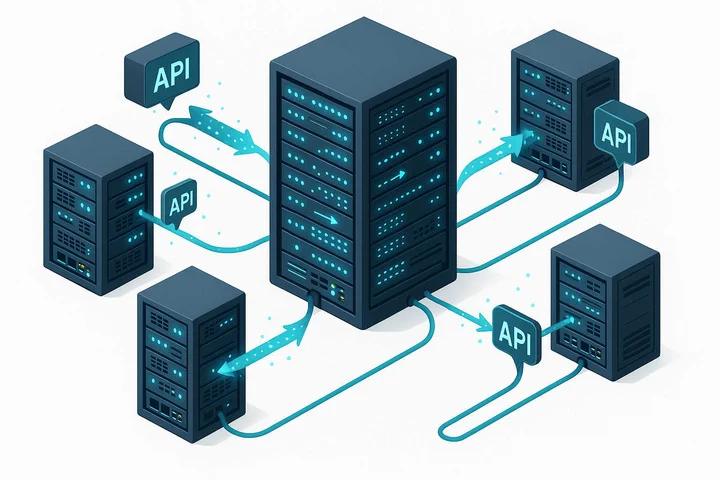
01REST APIs
The platform, programmable
Flocks, houses, feed, results — readable and writable through authenticated REST APIs, the same contracts the platform's own applications use. Pull your data into your warehouse, or push readings in from your own systems.
# Illustrative example — request API access for credentials and full docs
curl -H "Authorization: Bearer $POULTRYSYNC_TOKEN" \
  "https://api.poultrysync.com/v1/flocks?farm=farm-12&status=active"

{
  "data": [
    { "id": "flk_8842", "house": "H4", "breed": "...",
      "placed": "2026-06-12", "age_days": 26, "status": "active" }
  ]
}
Endpoints shown are illustrative; the full reference ships with API access.
02n8n automation
Automate the chain, no code required
PoultrySync events plug into n8n, so the operations team wires its own automations. Three recipes our customers reach for first:
Mortality spike → vet on WhatsApp
When a house's daily mortality crosses its threshold, the vet gets a WhatsApp message with the house, the number, and the trend.
Flagged lab result → QA task
A positive or out-of-range result opens a task for QA and notifies the farm's supervisor — before the paper report would have moved.
Morning digest → operations chat
Every morning, yesterday's key numbers per farm land in the operations channel — no one compiles anything.
03MCP for LLMs
Connect PoultrySync to Claude — or your local LLM
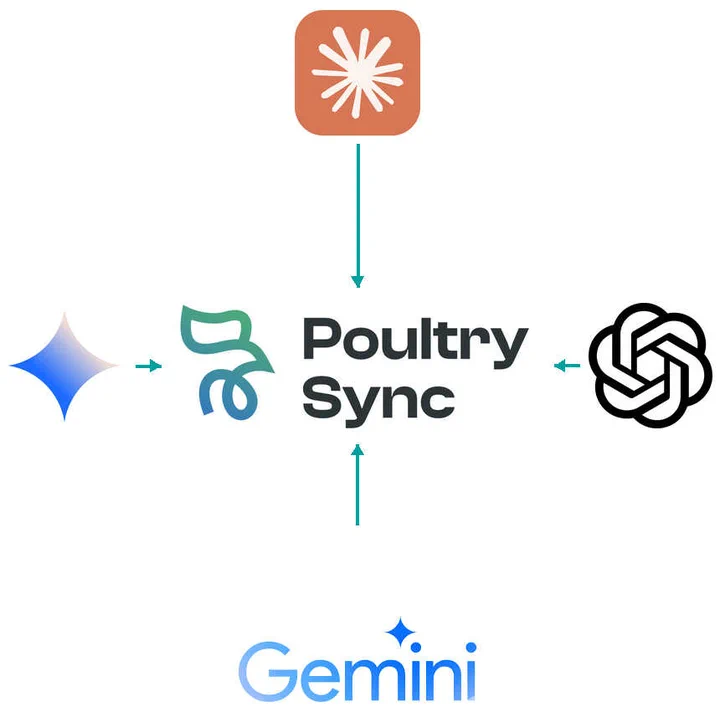
The platform speaks MCP (Model Context Protocol), the open standard for connecting AI assistants to systems. Point Claude — or a locally-hosted model in a sovereign deployment — at your PoultrySync MCP server, and your operation becomes something your AI can answer questions about, with the platform's permissions enforced underneath.
Security & authentication
API access is token-based and scoped: every credential maps to a role with the same granular permissions the platform enforces everywhere else. Nothing in the API layer bypasses what a user could see in the product.