
Poultry Carbon Footprint Solution
Put a credible carbon number on every kilo you ship. Because feed, energy, and flock data already live in the platform, the product carbon footprint is calculated from your own records, not estimated from an industry average.
What you manage
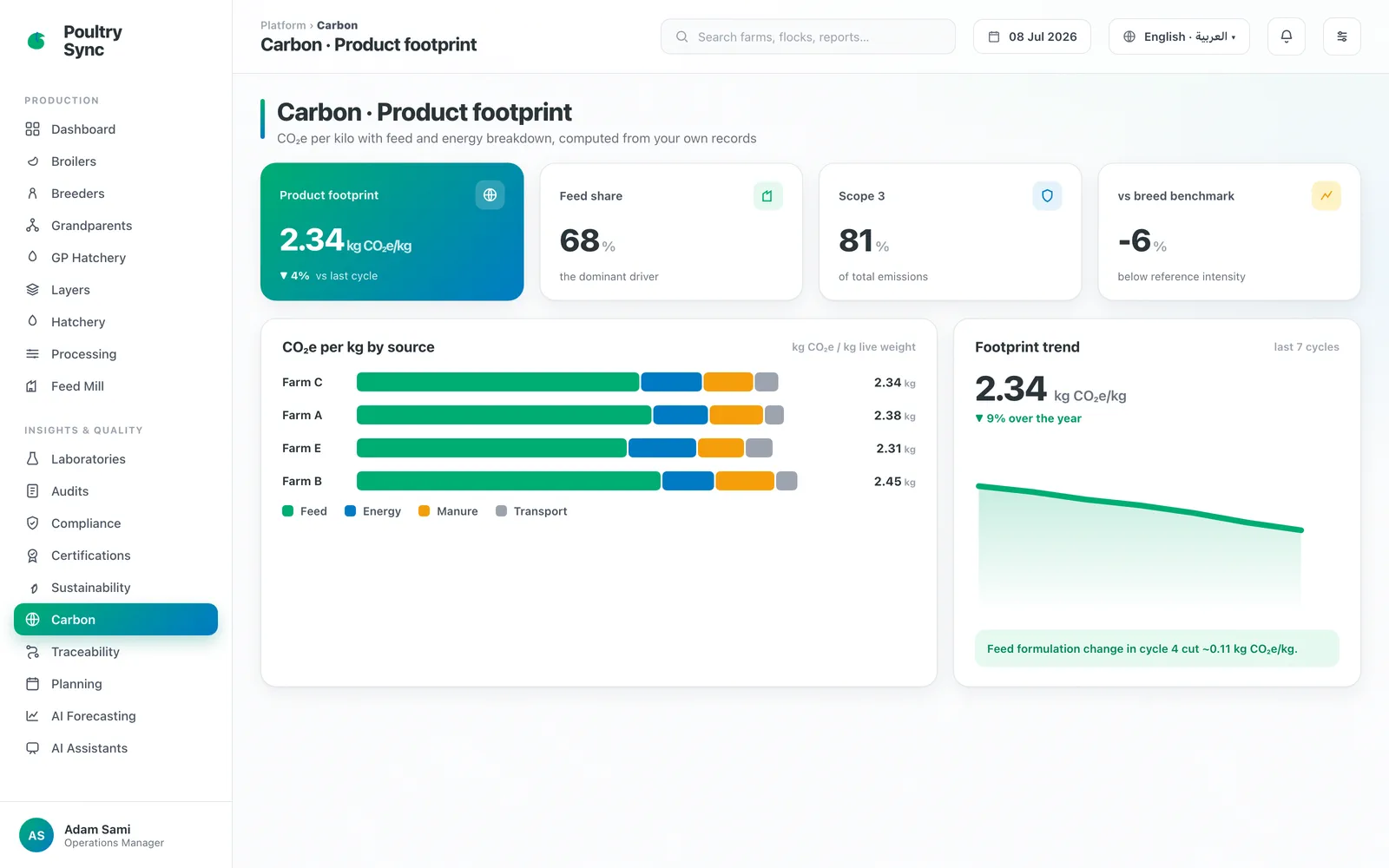
Product carbon footprint
CO2e per kilogram of live weight, meat, or egg, calculated per flock and per batch from your own data.
Feed-driven hotspots
Feed is the largest share of poultry's footprint — emissions are broken down by feed formulation and raw material, so reductions target what matters.
Emissions by scope
Direct, energy, and supply-chain emissions organized by scope, per site and per product line.
Reduction tracking
Footprint trended over cycles and years, so a formulation or energy change shows up as a measured reduction, not a claim.
Buyer & regulator reports
Carbon reports exported in the formats key accounts and authorities ask for, drawn from the same audited records.
Part of the sustainability picture
The carbon number feeds the broader Sustainability module alongside water, waste, and welfare.
Signature insight
A carbon number your buyers can actually trust
A footprint estimated from a generic database is easy to challenge. Because PoultrySync computes it from your real feed formulations, deliveries, energy use, and flock performance, the carbon figure per kilo is traceable to source records, which is exactly what a customer's own sustainability team, or an auditor, needs to accept it.
Powered by
Frequently asked questions
How is the carbon footprint calculated?
From your own data: feed formulations and quantities consumed, energy use, flock performance, and manure, mapped to emission factors. Because feed dominates poultry's footprint and the feed data is already in the platform, the calculation reflects your actual operation rather than an industry proxy.
Can I report the number to customers and regulators?
Yes. Carbon figures per kilo and per site are exported in the formats buyers and authorities request, traceable back to the source records that produced them.
How is this different from the Sustainability module?
Carbon focuses specifically on the emissions number, its hotspots, and its reporting. Sustainability is the broader picture — water, waste, welfare, and resource efficiency — and the carbon figure feeds into it.