
Poultry Sustainability Solution
Sustainability reported from the work itself. Feed efficiency, water, energy, waste, and welfare all come from records your teams already keep — so an ESG number is as answerable as a cost number, without a separate data project.
What you manage
Resource efficiency
Feed conversion is the biggest lever — less input per kilo produced, tracked as both a cost and a sustainability metric.
Water & energy
Water, electricity, diesel, and gas tracked per site alongside production, so intensity per kilo is visible and comparable.
Waste & mortality
Mortality, condemnations, and litter managed as both a welfare and a waste-reduction signal.
Animal welfare
Welfare observations from field visits and audits, trended per farm and benchmarked across sites.
Carbon footprint
The emissions number lives in the dedicated Carbon module and rolls up into the sustainability picture.
ESG reporting
Sustainability reports formatted for buyers, lenders, and regulators, generated from live data.
Signature insight
ESG reported at the same granularity as cost
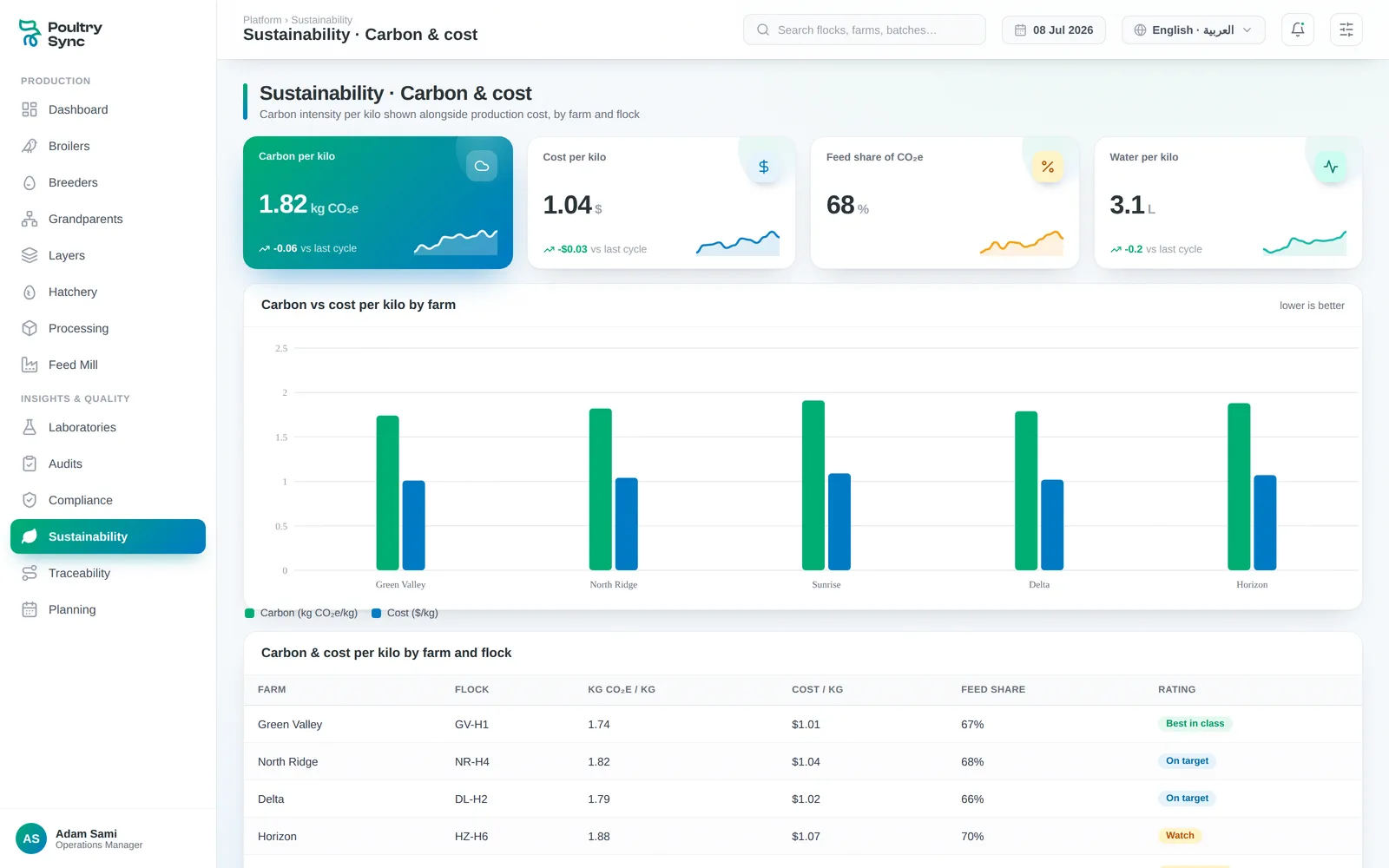
You already know your cost per kilo by farm and flock. The Sustainability module reports resource use, water, waste, and welfare the same way — computed continuously from the records your teams already keep — so sustainability is a management view, not a once-a-year consulting report.
Directly connected to
Frequently asked questions
Do we need a separate data-collection effort for sustainability reporting?
No — that is the point. Feed, water, energy, mortality, and welfare observations are already recorded in the operational modules, so the sustainability view runs on those records continuously.
Why do poultry companies need this now?
Global retailers, exporters, and lenders increasingly require sustainability and ESG data from suppliers. Reporting it from live records is becoming a condition of keeping those relationships — this is revenue protection, not green marketing.
How does this relate to the Carbon module?
Carbon handles the emissions number and its reporting specifically. Sustainability is the broader picture — resource efficiency, water, waste, and welfare — and the carbon figure rolls up into it.